We’re not where we used to be

You should be redirected to the new address. If that doesn't happen in a second, visit
http://short-sharp-shock.blogspot.com
Oh, and update your bookmarks. Thanks.

Monday, April 10, 2006

By the skin of their grills

It's come to this, ladies and gentlemen. Your Justice Department is eager to enforce laws against drug dealing and corruption, so eager, in fact, that it will stop at nothing to prosecute evildoers to the full extent of the law. Nothing. Not even your teeth.

In what may be the stupidest prosecutorial gambit in a long time, officials with the federal Bureau of Alcohol, Tobacco, Firearms and Explosives recently moved to have the "grills" -- gold-capped teeth favored by rappers and the hiphop crowd -- removed from the mouths of two suspected drug offenders, as a way to achieve asset forfeiture against two people seen as having profited from the drug trade.

The Seattle Times reported the story on April 7. If not for two attorneys who raised a huge stink about the proposed action in the literal nick of time, the two men -- charged with "several counts of drug and weapons violations in January" -- might well have found themselves on the receiving end of something out of the "Is it safe?" scene from "Marathon Man."


On April 4 -- yet another grim anniversary of the passing of Rev. Dr. Martin Luther King Jr. -- the two men, Flenard T. Neal Jr. and Donald Jamar Lewis, were moved from the federal "Detention Center" in SeaTac, near the airport, to the U.S. Marshals office in Tacoma, a short drive south.

"There they were told the government" -- the United States government! -- "had a warrant to seize the grills from their mouths and that they were being taken to a dentist in Seattle for removal."

Speaking to the Times, Richard Troberman, former president of the Washington Association of Criminal Defense Lawyers, got it just about right: "It sounds like Nazi Germany, when they were removing the gold teeth from the bodies, but at least they waited until they were dead."

Neal and Lewis called their attorneys but they were bundled into a van and whisked to Seattle. Their lawyers managed, in the time it takes from Tacoma to Seattle, maybe forty miles, to convince a judge that this was a toweringly bad idea.

Turns out the grills Neal and Lewis were flashing were part of their permanent dentition. "Some styles of grills," the Times reported, "can be snapped onto the teeth somewhat like an orthodontic retainer, while others are permanently bonded to the teeth."

But by then the feds saw the public-relations handwriting on the wall. They claimed not to know whether the grills were or weren't permanently bonded to the teeth of the two men, which shouldn't have mattered anyway. But when they found out, the seizure attempt was vacated. A permanent stay on the seizure was signed by a judge later on April 4, the Times reported.

Setting aside the abundant weirdness factor in this case, there's a sobering dimension to the plan, who it targeted and their status in the criminal justice system. "This is especially egregious because these two had not been convicted and are presumed to be innocent," Troberman observed for the Times.

Maybe U.S. Attorney General Alberto VO5 Gonzalez has it in mind to both prosecute domestic evildoers and help the American economy at the same time; perhaps it's all part of a Forensic Dentists' Full Employment Act to be introduced in Congress.

Whatever. Score one for common sense, a winner by the skin of oral precious metals.
-----
Image credit: Bottom: Calliopejen, through Wikipedia licensed under Creative Commons Attribution 2.0 license

Sunday, April 9, 2006

War without end, amen II

The frequent flyer-in-chief is lately on the move again, crisscrossing the country to shore up support for the war in Iraq. The urgency of these domestic sorties, their almost painful automaticity, illustrates just how politically wounded President Bush has become as he faces a broad range of problems stemming from the war, including the persistence of a robust insurgency and a rising tide of opposition at home.

Case in point: On Bush's airborne whistlestop to Charlotte, N.C., on Thursday, the president faced an unusually hostile crowd in his own political backyard. At a speech before the World Affairs Council of Charlotte, Bush faced the comments of one man in the audience -- and not the usual audience pre-sanitized for his convenience. Harry Taylor, a 61-year-old real estate broker, spoke of the paradox of the president speaking of freedom when certain presumably unassailable civil liberties were under siege in America.

"What I wanted to say to you is that I, in my lifetime, I have never felt more ashamed of, nor more frightened by my leadership in Washington, including the presidency, by the Senate,' Taylor said.

"I would hope from time to time that you have the humility and the grace to be ashamed of yourself."

This was no wild young yahoo, no grunge-soaked ragamuffin, no disaffected twenty-year-old knucklehead that the president or the crowd could ostracize and belittle as part of the reflexive liberal fringe. Notwithstanding the man's membership in MoveOn.org, a liberal political group that assumed a maverick role in the 2004 election, Harry Taylor's comments came from someone with presumably long standing in the community, a man nearing retirement age -- someone not unlike the people who swept Bush into a second term not that long ago.

To be sure, Bush had his supporters in the crowd, but even their support had unintended ironies. The New York Times reported that one woman expressed backing for Bush, saying "My heroes have always been cowboys" -- apparently oblivious to the wicked double entendre of the word "cowboy" in the context of a 21st-century American president at war.

The great unraveling has continued from last month, and one especially embarrassing performance in one of the president's least favorite forums.

On March 21, with all the dutifully suppressed distaste of a man prepping to undergo a root canal for the first time, President Bush stood front and center at a White House press conference and proceeded to blame the press for the bad news coming out of the Iraq war, even as he set a no-timetable timetable for ending that war at a date beyond the life of his own administration.

At the hastily called conference, which Bush probably hates as much as any dental operation, Bush said that troops would be in Iraq after his presidency ends in 2009, almost three years from now. When those troops would all be withdrawn, he said, "will be decided by future presidents and future governments of Iraq." In one statement, George Bush placed as a political issue the Iraq war -- its human, diplomatic and financial costs -- firmly around the neck of the Republican party for years to come.

It can't have escaped anyone's attention that Bush used the phrase "future presidents" Maybe it was just a linguistic misstep, one of many the president is well known for. But it raises the troubling specter of American forces bogged down in Iraq for decades.

That this prospect shouldn't be fair game for reporters is one of the issues that's long divided the White House and the press. Bush alluded to the matter of what the press covers and how much at the press conference, suggesting that, in a repeat of an old argument, the good news stories about Iraq are overcome by the bleeds-leads mentality of journalists, and the visual drama of a fresh wave of insurgent attacks.

"They're capable of blowing up innocent life so it ends up on your TV show," the president said to CBS News' Jim Axelrod. "I can understand how Americans are worried about whether or not we can win. ... I understand people being disheartened when they turn on their TV screen. Nobody likes beheadings."

Implicit in that statement is the idea that, distilled to its essence, if the press weren't there to report those events, those events wouldn't happen. The folly of that position has lately aroused the ire of the Washington press corps, whose attack-dog tendencies, usually held in abeyance in the presence of the president himself, have lately been, well, unleashed in his direction.

It's all led to what looks to casual observers like a rise in tension, certainly within the administration and, from the sad and frightening visible evidence, the president himself. And a photograph from the March 21 press conference is instructive. The image, taken by Associated Press photographer Charles Dharapak, is one of George Bush, face tight as a fist, the President of the United States of America looking like nothing so much as a man about to explode.
-----
Image credit: © 2007 Harry Taylor for Congress

Wednesday, April 5, 2006

Will we respect her in the evening?

One of the longest courtships in television history was consummated today. Like the charming, ambitious Charles Foster Kane -- who looked through the window of a rival newspaper at a photograph of its staff before acquiring their services -- CBS top dog Les Moonves got his candy, all of it, in the form of one Katharine Couric, soon to become the first sole female television news anchor in the history of the medium according to America.

It's all over but the reactions from the public and the press. The results of a spanking-new poll conducted this week by The Associated Press and TV Guide may hold the key to Couric's fortunes in the nation's evening hours.

According to the AP/TV Guide poll, when asked if they'd rather see Couric in her longtime (15 years and counting) role as host of the “Today” show or as the first woman to anchor a U.S. network weekday evening newscast solo, 49 percent favored Couric in the morning and 29 percent wanted Couric in the evening.


In her new role as anchor and managing editor of the “CBS Evening News” (she starts in September), Couric becomes the beneficiary of a slowly-increasing audience for the Tiffany Network News. While her loyal audience at “Today” is now about 6 million viewers, and likely to stay there until she bows at "Today" in May, Couric inherits a “CBS Evening News” audience of about 7.5 million viewers.

It's an equally safe bet that many of them will stay for the early rounds to see how Couric looks behind an anchor desk, instead of her previous backdrops and costumes (narrating the Macy's Thanksgiving Day parade, or dressing like SpongeBob SquarePants on Halloween, for example).

Which leads us to how the press, her colleagues in the business, are reacting to her ascension. Interviewed by the AP, news consultant Andrew Tyndal says that the incessant claims that Couric lacks the “gravitas” for the job are “thinly disguised sexism.” Tyndal went on to suggest that the same arguments brought against Couric for being insubstantial were strangely absent when one considers that former NBC News anchor Tom Brokaw took roughly the same path to the high chair at the Peacock Network, coming up through the ranks as a fixture on "Today" alongside Jane Pauley.

Another journalist, however, says there is a difference in style and temperament between morning and evening programs, and the audiences of each group varies. “This relationship (with viewers) will be different — it’s a more serious, more weighty and more important position,” said Charlotte Grimes, journalism professor at Syracuse University. “It’s going to take a different set of skills,” she told the AP.

It's fair to say that Couric has ably demonstrated the other side of her skill set, the gravitas part, on that day when journalists all over America grew up: Sept. 11, 2001. In short order, Couric necessarily made the shift from perky morning-show host to witness to a national tragedy, working for much of the early going alongside Brokaw as a solid hard-news journalist in the best traditions of the craft: emphatic yet empathic, relatively objective but not blind to the emerging human dimensions of the worst foreign incursion on American soil in centuries.

For his part, Bob Schieffer, who's been pinch-hitting as anchor since Dan Rather's departure, is solidly in Couric's corner.

"She's a great interviewer, people know who she is, and she has enormous credibility. People believe her. They take her seriously," Schieffer told the Philadelphia Inquirer's Gail Shister. You want journalistic gravitas? The G word may well be Schieffer's middle name. With a vote of confidence from that wily veteran of the Washington press corps, the game is Couric's to lose.

So we'll see. We've got about five months to prepare for this Paradigm Shift in broadcast TV news, and a lot can happen between now and fall. ABC's Bob Woodruff should be back on the job after his injuries in Iraq in January. For the perennial No. 3 network in the news ratings race, the appointment of Katie Couric may be just the tonic the doctor ordered. Maybe not so much a tonic as, uh, a high colonic.

Stay tuned.

Saturday, April 1, 2006

O'Connor speaks, no tape at 11

In the future, a shockingly powerful statement on the prospects for American dictatorship made by retired Supreme Court Justice Sandra Day O'Connor may resonate with an unlikely irony: For generations yet unborn, one reporter's recalled paraphrase of a 400-word precis may be our only indicator of an unsettling assessment of what may be a dangerous American trend. Irony of ironies: In a time of relentless press coverage of everything under the sun, in the researchable and archivable Internet age, perhaps the most dire, woeful forecast of the nation's possible future ever uttered in public largely managed to fly under the radar of the 24/7 press.

O'Connor's cri de coeur (or cri pour la justice) took place on March 9, sometime during a speech that morning at Georgetown University. Despite the profile of the speaker, just five weeks removed from being in one of the nine most powerful jobs in American life, it seems that the speech was scarcely covered by the press. From all indications, National Public Radio reporter Nina Totenberg was the only press witness to the event. No recording, no videotape, as yet no official transcript from the speaker herself.

What follows here is a transcript of O'Connor's comments as reported by Totenberg on NPR and published online by RawStory.com:

Totenberg: "In an unusually forceful and forthright speech, O’Connor said that attacks on the judiciary by some Republican leaders pose a direct threat to our constitutional freedoms. O’Connor began by conceding that courts do have the power to make presidents or the Congress or governors, as she put it “really, really angry.” But, she continued, if we don’t make them mad some of the time we probably aren’t doing our jobs as judges, and our effectiveness, she said, is premised on the notion that we won’t be subject to retaliation for our judicial acts. The nation’s founders wrote repeatedly, she said, that without an independent judiciary to protect individual rights from the other branches of government those rights and privileges would amount to nothing. But, said O’Connor, as the founding fathers knew, statutes and constitutions don’t protect judicial independence, people do.

"And then she took aim at former House GOP leader Tom DeLay. She didn’t name him, but she quoted his attacks on the courts at a meeting of the conservative Christian group Justice Sunday last year when DeLay took out after the courts for rulings on abortions, prayer and the Terri Schiavo case. This, said O’Connor, was after the federal courts had applied Congress’ onetime only statute about Schiavo as it was written. Not, said O’Connor, as the congressman might have wished it were written. This response to this flagrant display of judicial restraint, said O’Connor, her voice dripping with sarcasm, was that the congressman blasted the courts.

"It gets worse, she said, noting that death threats against judges are increasing. It doesn’t help, she said, when a high-profile senator suggests there may be a connection between violence against judges and decisions that the senator disagrees with. She didn’t name him, but it was Texas senator John Cornyn who made that statement, after a Georgia judge was murdered in the courtroom and the family of a federal judge in Illinois murdered in the judge’s home. O’Connor observed that there have been a lot of suggestions lately for so-called judicial reforms, recommendations for the massive impeachment of judges, stripping the courts of jurisdiction and cutting judicial budgets to punish offending judges. Any of these might be debatable, she said, as long as they are not retaliation for decisions that political leaders disagree with.

"I, said O’Connor, am against judicial reforms driven by nakedly partisan reasoning. Pointing to the experiences of developing countries and former communist countries where interference with an independent judiciary has allowed dictatorship to flourish, O’Connor said we must be ever-vigilant against those who would strongarm the judiciary into adopting their preferred policies. It takes a lot of degeneration before a country falls into dictatorship, she said, but we should avoid these ends by avoiding these beginnings." [Italics are mine]

RawStory.com, the bloggers and some of the online press, God love 'em all, were on the case almost from the beginning, with transcripts of the statement (or as close to transcripts as secondhand recall would allow). That evening, Keith Olbermann, host of "Countdown" on MSNBC (my employer) kicked the issue around with Mike Allen of Time Magazine. The Guardian (UK) picked up on the story, with an op-ed piece by Jonathan Raban, followed by Jack Shafer, who weighed in the following Monday in Slate.

But what's clear here is exactly the problem. Almost uniformly, the electronic press at least tried to represent on the issue. The newspapers were way behind the curve. Where were The New York Times, the Los Angeles Times and The Washington Post? Why weren't they at the original event? Georgetown has to be considered the Post's neighborhood -- hell, its very backyard; how'd they get caught asleep at the switch on a story like this?

The story is especially arresting in this election year, in no small part because the comments come from a stalwart of the Republican party speaking -- free at last of the need for judicial circumspection -- in unflattering terms about the Republican leadership in the Congress. Her comments showed again how fragmented the GOP has become in recent months, from the executive to the legislative branches, and now the judicial.

There may be another side to it. The dead-tree media might make the case that newspapers didn't so much miss the story as they missed the immediacy of the story, possibly deciding that by the time they could do anything productive with it in print, they'd have already been outflanked by the bloggers and the electronic mainstream media.

That might be correct -- these days it's a given that airborne media gets the jump on everything -- but it still doesn't explain why the major dailies, which delight in pissing from a great height with such big stories, generally dropped the ball.

The San Francisco Chronicle made the speech the subject of an op-ed five days after NPR aired the Totenberg piece. Raban (writing in the Stranger, an alternative Seattle weekly) reported that the Houston Chronicle and the Salt Lake Tribune also carried op-ed pieces based on Totenberg's reporting. And the Times finally did show up at the party, trying to bigfoot everybody with a comprehensive story that combined O'Connor's comments with those from a similarly-themed speech by Supreme Court Justice Ruth Bader Ginsberg in February.

But frankly, it's all weak tea from the branch of the media that can't afford to let itself look complacent or out of touch. O'Connor's statement -- in its urgency not unlike Winston Churchill's announcement of "an iron curtain" across Europe, in a March 1946 speech, or President Dwight Eisenhower's warning, in January 1961, of the rise of a "military-industrial complex" -- is the kind of lucid, non-ideological, valuable wake-up call Americans often don't even realize is a wake-up call, and can't afford to miss. It's a shame that this time, a cross-section of the nation's print media wasn't awake to make it.
-----
Image credit: O'Connor: U.S. Supreme Court (Public domain)

Monday, March 20, 2006

Vietnam, the sequel

That's what one former U.S. official, a man at least passingly familiar with the last national quagmire, suggests about the current conflict in Iraq. Former Reagan Secretary of State Alexander Haig, who after all was once In Control at the White House, said as much on March 11, at a conference in Boston. Victory -- or at least an achievement of some set objective -- requires a commitment to win, a national consensus, that Haig finds absent today.

“Every asset of the nation must be applied to the conflict to bring about a quick and successful outcome, or don’t do it,” Haig said, according to Associated Press reports. “We’re in the midst of another struggle where it appears to me we haven’t learned very much.”


Haig spoke at a conference at the John F. Kennedy Presidential Library and Museum, an event meant to look at how the Vietnam War and the American presidency were intertwined. It was an occasion to gather some of the best & brightest from previous administrations.

Besides Haig and Vietnam War architect and former Secretary of State Henry Kissinger, there was Jack Valenti, adviser during the Johnson administration and former head of the Motion Picture Association of America.

Valenti observed what the current occupants of 1600 Pennsylvania Avenue seem to have overlooked despite hang-tough pronouncements, that the lessons of Vietnam have been “forgotten or ignored” in Iraq, and that “no president can win a war when public support for that war begins to decline and evaporate.”

Valenti's assessment is that much more problematic when support for both the president and the war he engineered decline at practically the same time. On this, the third anniversary of the start of the Iraq war, the president faces a restive Congress, an equally querulous electorate and an intractable insurgency that shows every sign of digging in. And as the Republican Haig's comments and the reactions from some in the GOP Congress indicate, the problems for the Bush presidency no longer hew conveniently along party lines. Even presumed allies are finding fault.

It's the kind of situation that makes possible results from the latest poll by Pew Research Center for People and the Press, which put it in perspective: "Bush’s overall approval measure stands at 33 [percent], the lowest rating of his presidency." In other data from the same poll, Pew reported that 70 percent of Americans think President Bush "does not have a clear plan for bringing the Iraq conflict to a successful conclusion." Again, it's not a party-line conclusion: Pew reports that "40 [percent] of Republicans share this opinion."

That train wreck of leadership numbers has a nasty parallel in the personality department. "The president’s personal image also has weakened noticeably, which is reflected in people’s one-word descriptions of the president," stated another part of the Pew report, released March 15. "Honesty had been the single trait most closely associated with Bush, but in the current survey 'incompetent' is the descriptor used most frequently."


It gets worse than that. In a riotous extension of its usual businesslike polling approach, Pew got into the word association game, offering respondents a range of one-word descriptor choices, including "selfish," "ass," "jerk," "idiot," "liar" and other language we can charitably call less than presidential.

I'm forgoing the raw numbers and which words placed highest in respondents' reaction. In some ways the range of words used to describe the commander-in-chief, the highs and lows of such scoring, don't even matter. The very idea that those words could or should be used in juxtaposition with the phrase "President of the United States" is a strong indicator of just how far Bush has fallen in recent months -- to say nothing of his decline from just after Sept. 11, 2001, when George Bush the Younger commanded approval ratings in the 80th percentile, the highest such approval ratings for a sitting president since, believe it, Franklin D. Roosevelt.

The rise and fall of George Bush as president parallels the rise and fall of a war effort that was problematic from the start. The fact that the administration is staking so much of its reputation and historical standing on the outcome of the war must be a given at this point. The one thing that's in play now, where the debate engages, is in the analyses of whether Iraq is or is not now in the midst of a civil war.

The administration's perspective is, understandably, in the negative, with various administration talking pointed heads insisting that there is no civil war -- that the challenges, admittedly serious, are still short of that level of catastrophe. The vested interest in the administration's view of there being no civil war can't be ignored.

But there's also no ignoring the viewpoint of one man in a singular position. Former Iraqi Prime Minister Ayad Allawi said it plain yesterday in an interview with the BBC, calling it "unfortunate that we are in civil war. We are losing each day as an average 50 to 60 people throughout the country, if not more. If this is not civil war, then God knows what civil war is."

There in a succinct, articulate nutshell is the dilemma for the United States: In the face of mounting sectarian depravities, how can the U.S. go on insisting that the same situation Allawi says has already started doesn't yet exist? Allawi's assessment is frightening enough -- with words that have the ruthlessly pragmatic ring of the Truth, and by virtue of their perspective, coming from a man who's certainly in a position to know what he's talking about.

But it gets worse: Allawi told the BBC that if Iraq were to fold, the same ethnic violence that's tearing that country apart would surely metastasize throughout the Middle East, in such a way that Europe and the United States would feel it too.

Various Americans, from Ted Kennedy to gold star mom/activist Cindy Sheehan, have long been calling the Iraq war a sequel to the debacle of Vietnam. Today, the third anniversary of the start of the Iraq war, the comparisons are that much brighter, clearer, starker and harder to deny -- even for cold warriors like Haig and Valenti. Their grim assessment of the present is based on an intimate knowledge of and participation in the past. Their conclusions deserve to be heard amid the shock and awe of our uncertain future.

Tuesday, March 7, 2006

Boom! Pow! 'Crash'!

This year's edition of Oscar Season was a departure from past observances of the appearance of the Golden Dude, but the kind of departure that points to Hollywood's future as a kind of hopeful thing, a time in which Hobbits and Wookies coexist with spies and arms dealers, and just maybe, red states and blue states learn to just get along. Maybe anyway. With "Brokeback Mountain" denied the Best Picture Oscar, the blue states licked their wounds and went home, and the red states had a laugh.

But as the smoke clears around the Kodak Theater, the question persists: Why did "Brokeback Mountain" -- all but coronated Best Picture beforehand -- fail and the more diffidently received "Crash" succeed? Los Angeles Times film critic Kenneth Turan observed that despite "Brokeback's" success, “you could not take the pulse of the industry without realizing that this film made people distinctly uncomfortable.”

“In the privacy of the voting booth," Turan wrote, "people are free to act out the unspoken fears and unconscious prejudices that they would never breathe to another soul, or likely, acknowledge to themselves. And at least this year, that acting out doomed ‘Brokeback Mountain.”’

Still, despite "Brokeback's" fate, and whether Sunday's Oscar outcome was a reaction to the undercurrent of conservatism in post-9/11 America, or a more organic shift in understanding how the nation thinks and feels today, the Oscar Experience 2006 was more open-minded, emotionally and stylistically democratic, unabashedly liberal and multicultural than it's been in some years.

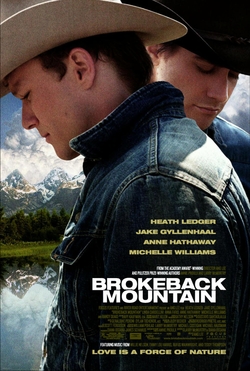
"Brokeback Mountain," the story of two cowboys and their romantic experience over twenty years, was odds-on favorite to win for Best Picture. Had been all this year and part of last year, too. But all the talk about "Brokeback" obscured other nominated films exploring other lives in the American dynamic.

"Capote" stars Philip Seymour Hoffman in a true star turn as Truman Capote, in a story about the writer's journalistic coverage of the Clutter family murders and the two men responsible for them. Hoffman, for some time now considered an actor's actor, is spot on as Capote; the fact that Hoffman was nominated for his portrayal of a gay cultural icon, as well as a celebrated figure of American letters, is a refreshing departure for the Academy.

Another one was the nomination of Felicity Huffman as Best Supporting Actress, for her role in "Transamerica," the story of a man preparing for sex-change surgery.

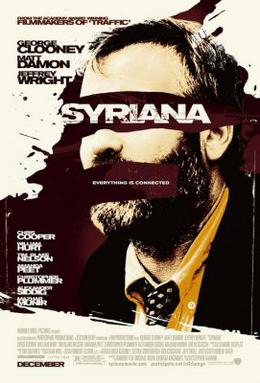
And the Academy clearly had a wet spot for agent provocateur George Clooney, double-nominated for Best Director for "Good Night, and Good Luck," his story of the clash between CBS newsman Edward R. Murrow and Sen. Joseph McCarthy, and for Best Supporting Actor for "Syriana," a story of intrigue and government deception set in today's Middle East.

You had a sense of where things were going when Ang Lee won as Best Director for "Brokeback." That discomfort some Academy members had about the film didn't extend to the director, who we understand is genuinely loved in Hollywood. But clearly the wheels were turning: How to honor the director and benignly register the discomfort about the film he directed? And how best to give due props to "Crash," a film whose look at contemporary Los Angeles resonates both as reality and urban myth to the Academy voters, who live there?

The Academy split the difference, making Ang Lee the first nonwhite guy to win as Best Director, and elevating "Crash" to Best Picture in an upset win that cemented its little-engine-that-could status, a victory that partially redeemed the train-schedule regularity of the broadcast.

Again, the Academy's willingness this year to accommodate stories on a man switching genders, a flamboyant gay writer, two secretly gay cowboys, a liberal take on Republican Joe McCarthy and a less than flattering look at U.S. intelligence in the Middle East may be nothing more than the Academy response to great performances of great roles by great actresses and actors. But nothing in America happens without a context. Nature may abhor a vacuum, but popular culture loves an echo chamber.

It's hard to buy the idea that these films arriving on the American scene at this time is just coincidence. It takes too long to make and market a movie to rely on happenstance; for better or worse, the making of a motion picture may be our abiding pop-cultural example of what psychologist Irving Janis, in 1972, called groupthink: a situation "when the members' strivings for unanimity override their motivation to realistically appraise alternative courses of action."

But the arrival now of these films, whose subjects and stories run counter to the conservative groupthink of today's America, suggests that some creative forces in American life think the wheel is starting to turn -- that the lives of gays, lesbians and transgendereds deserve equal cinematic opportunity; that the duplicities of American spycraft generate a host of unintended victims this nation would rather not know about; that a story of journalists battling the U.S. government of fifty years ago is as pertinent today as it was back then, and maybe more so.

As always, Clooney got it just about right -- pitch-perfect, really -- after winning the Best Supporting Actor Oscar for "Syriana." Accepting the award, he relished the role of the artist (Academy member, actually) as an outsider in American society. Clooney deftly turned the conservative indictment of the entertainment industry -- that they're "out of touch" with mainstream America -- back on itself, in a masterful embrace of outsider status Hillary Clinton would do well to evaluate.

In a nutshell Clooney gave artists, writers and all free thinkers reason to hold their heads high.

"I would say that, you know, we are a little bit out of touch in Hollywood every once in a while, I think. It’s probably a good thing. Uhm, we’re the ones who talk about AIDS when it was just being whispered. And we talked about civil rights when it wasn’t really popular. And we, uh, you know, we bring up subjects…we are the ones…this Academy, this group of people gave Hattie McDaniel an Oscar in 1939 when blacks were still sitting in the backs of theaters. I’m proud to be a part of this Academy. I’m proud to be part of this community. I’m proud to be out of touch."

Maybe it was the heat of the moment, but he didn't get it exactly right. On the March 6 edition of MSNBC's "Countdown" with Keith Olbermann, Village Voice writer and pop-cultural bete noire Michael Musto pointed out that black people were seated in the back of the hall when Hattie McDaniel won her Oscar -- the winner herself was escorted to a table in the rear of the Coconut Grove of the Ambassador Hotel -- and that Hollywood, far from being out in front on AIDS, came years late to the matter of addressing that dread disease (look how long after the epidemic hit before Tom Hanks won the Oscar for his work in "Philadelphia").

But in some other important ways, Clooney was right: It's the job of artists, he seemed to say, to act as the sentinels, the mavericks, the canaries in the coal mines of society, the little kid in the crowd who's not afraid to call the emperor on his wardrobe. And never mind the concerns about industry grosses and box-office receipts, and the other typical retorts of those who can't see what really stands for progress:

From all the nominated films to other films like "Lords of War" and "God Sleeps in Rwanda" that didn't get the Academy's attention this time, to other films still in the brains and keyboards of writers we haven't heard from yet, there's abundant evidence that the old laws of who wins, who loses and who participates in Oscar Hollywood have changed permanently.

Sometimes -- usually, even -- the Big Picture emerges from the smaller ones.
-----
Image credits: Ang Lee: Taiwan Government (public domain); Syriana: Warner Bros. Brokeback Mountain: Universal Pictures