We’re not where we used to be

You should be redirected to the new address. If that doesn't happen in a second, visit
http://short-sharp-shock.blogspot.com
Oh, and update your bookmarks. Thanks.

Friday, April 13, 2007

Imus in the mourning

Rage is a strange and powerful thing. It leads men to temptation, it makes allowances for trespass and brooks no forgiveness for those who trespass against us. It leads us to turbulent waters, clouds the judgment and the heart, and makes people see things that aren't really there. Rage reveals both folly and tragedy in pretty much equal measure; it's fundamental to the national conversation, and if you choose to ignore it, you do so at your own peril.

In the stark Fitzgerald's 3 a.m. of his soul, if he were honest about it, George Bush would tell you this.

So would John Donald Imus.

Imus, the 67-year-old legendary radio personality, noisy scold, tireless social commentator and iconoclastic firebrand, has made a career of outrage and impatience and a certain willingness to take shots at people whether they deserve it or not.

It's all made for a rabidly loyal following of fans -- listeners to his radio shows on WNYC and, more recently, WFAN Radio; public figures at every level, including politicians, authors and musicians; and most recently viewers of "Imus in the Morning," a cable TV-simulcast version of his WFAN radio show broadcast by MSNBC from their studios in Secaucus, N.J.

In a sports segment on April 4, at 6:14 a.m. local time, talk between Imus and his broadcast partners turned to the NCAA women's basketball game between Rutgers University and Tennessee.

"That's some rough girls from Rutgers," Imus cracked. "Man, they've got tattoos and ... " At that point Bernie McGuirk, Imus's longtime friend and producer, jumped in. "Some hard-core hos," he said. Imus, laughing, pressed further. "That's some nappy-headed hos there, I'm going to tell you that now," he said. Belly laughs all around. After a few more ugly jibes, they were on to the next thing.

Unspoken, for the most part, was the fact that April 4 was the 39th anniversary of the assassination of Rev. Martin Luther King Jr. in Memphis.

The shitstorm of protest started early and seriously. The Imus exchange was noted by a sharp researcher at Media Matters for America, the Washington-based media watchdog group. Then the head of the National Association of Black Journalists called for his ouster. Jesse Jackson and Al Sharpton weighed in (a little automatically but necessarily, too).

And just that fast, the bigger shoes dropped. By April 6, the advertisers began to bail from both CBS Radio and MSNBC. Sprint Nextel, Staples, Ditech, GlaxoSmithKline, General Motors, Procter & Gamble and other deep-pocketed heavy hitters threatened to jump ship; in the minds of many, that prospective desertion by advertisers sounded the death knell for the Imus program as much as any lapse of ethics or social judgment.

In an attempt at damage control, on April 9: Imus said "Want to take a moment to apologize for an insensitive and ill-conceived remark we made the other morning regarding the Rutgers women's basketball team.

It was completely inappropriate, and we can understand why people were offended. Our characterization was thoughtless and stupid, and we are sorry."

Note the liberal exercise of the Royal 'We," a transparent attempt, some said, at deflecting the criticism beyond the person responsible: Imus himself.

Then came other damage control: MSNBC released a statement the same day: "While simulcast by MSNBC, 'Imus in the Morning' is not a production of the cable network and is produced by WFAN Radio. As Imus makes clear every day, his views are not those of MSNBC. We regret that his remarks were aired on MSNBC and apologize for these offensive comments."

But it was so much weak tea, preceded as it was by previous promises by Imus not to resort to such broad and ruthless castigations. David Carr, the media columnist for The New York Times, wrote that Imus' remark was "the kind of unalloyed racial insult that might not have passed muster on a low-watt AM station in the Jim Crow South."

Imus was put on a two-week suspension by both WFAN/CBS and MSNBC. That might have been enough if not for something unexpected of Imus' usual targets. The Rutgers team decided to fight back.

The team's coach, Vivian Stringer, spoke eloquently about the impact of Imus' words on the team, and the wider signal it sent about America. Her comments -- long-winded but surely heartfelt -- had the devastating impact of a watershed event. In their own way, Stringer's respone and that of the black members of the team were the same kind of cri du coeur as those made by Joseph Welch to Sen. Joseph McCarthy at the House Un-American Activities committee hearings in 1953. "At long last, Mr. Imus," Stringer seemed to say, "have you no sense of decency?"

Imus was fired by MSNBC on April 11. CBS Radio cashiered him yesterday.

Popular culture, being the debris-strewn superhighway that it sometimes is, will grow around this little episode. Imus will no doubt turn up somewhere else in the information ether, hopefully a little wiser and circumspect about what he says, more learned in doing one of pop-culture's more enduring dance steps: the Mea Culpa Mea Culpa Kum Ba Yah.

But his comments had an impact beyond the words containing the comments, and an object lesson for anyone who works with words for a living.

For many people, maybe the most galling thing about the Imus comments weren't specific to the comments themselves. Imus’ commentary proved, absolutely and undeniably, just how low the behavioral baseline for public discourse has fallen in recent years. With his acutely ridiculous statement, it was no longer enough to be a card-carrying rap artist with gold chains, gold teeth, a gold Glock, ready cash and an appetite for the trademark excesses of the thug life (all of that mental construction as much a fabrication, an imitation of life, as anything remotely resembling reality).

Don Imus reset the mark: Now, and especially if you were African American and young, you were a target if you were ordinary people, hard-working, hard-studying exemplars of middle-class values, people putting one foot in front of the other, trying to survive. Imus’ remarks wounded precisely because of the pointless randomness of their intended targets. Everyone, no matter who you are, how undeserving of ridicule, everyone can be a target of the angry cosmology of John Donald Imus.

Words can hurt, words can damage. Anyone who truly respects the power of words understands that. Ten or twenty years later than he should have, Don Imus is learning that now.
-----
Image credit: Time magazine

Monday, February 26, 2007

Marty, Oscar, Oscar, Marty

It's true: You really do see everything if you live long enough. In the past five years, we've seen African American actors nail down the best actor Oscars in three of the past five competitions, we've seen black actresses win awards for best actress and supporting actress, and we've witnessed the true internationalization of the Academy Award phenomenon, with Asian and Latino talents in front of and behind the camera making the Oscars the world party the Oscars always purported to be.

But last night, one event truly stood out as a validation of the idea that fair play is more than a good idea, equality more than a polite notion -- even in Hollywood.

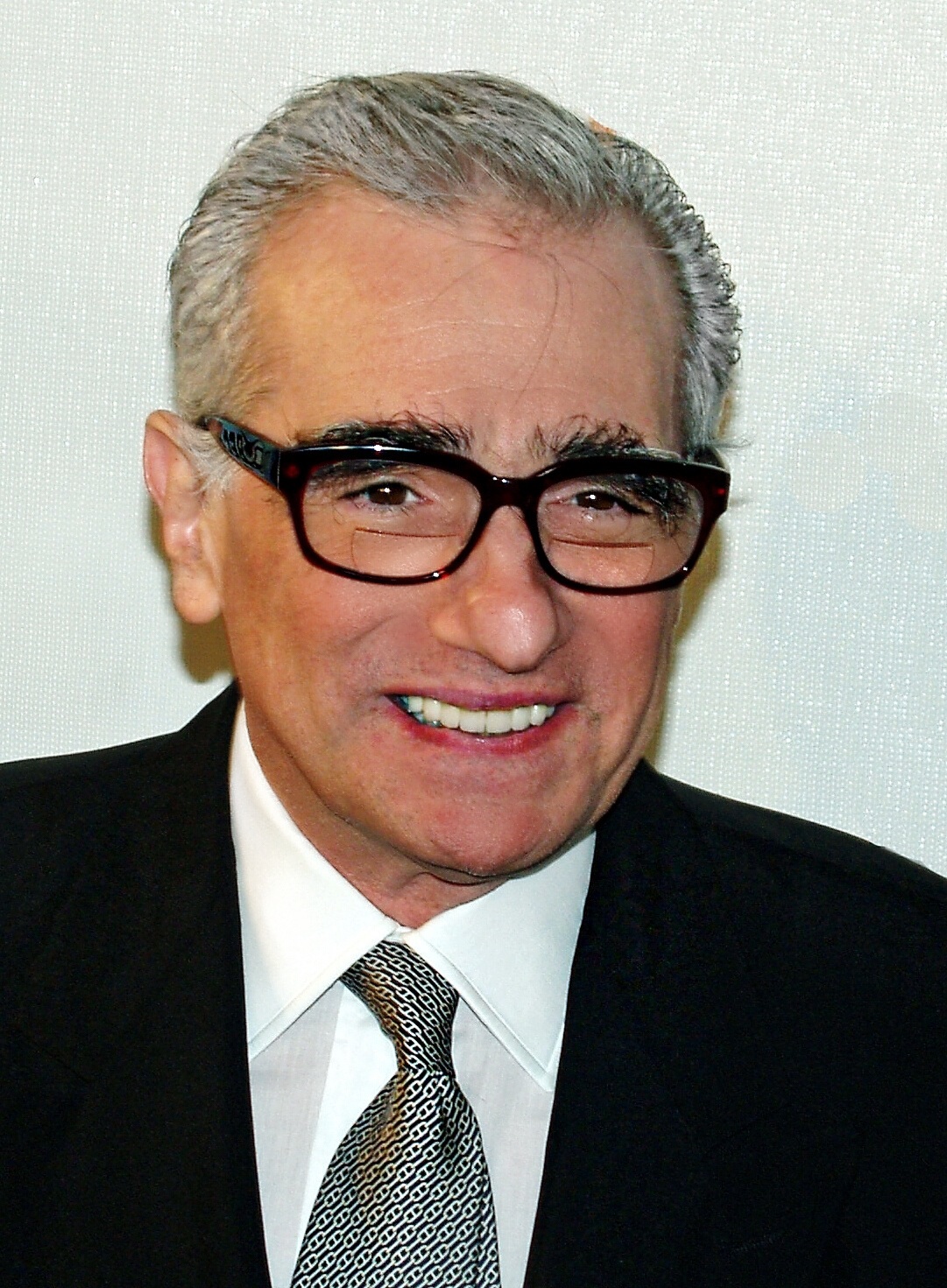
When the trio of old friends Francis Coppola, George Lucas and Steven Spielberg stood at the podium in the Kodak Theater, and Spielberg announced Martin Scorsese was the winner for Best Director, it was -- finally! -- the academy's validation of what moviegoers have known for a long time, possibly since the death of Stanley Kubrick, certainly since the passing of Robert Altman: Martin Scorsese is our greatest living American director, a man at the top of his game.

The Calvin Kleined, Christian Lacroixed crowd at the Kodak knew it too. The Oscars are all about glitter and ceremony, but when Steven Spielberg said his name, the audience broke into spontaneous whistles and shouts, breaking with a 79-year history of decorum. You'da thought this was the Golden Globes, for Christsake.

The man who was fast becoming the Susan Lucci of the Academy Awards, cracked wise -- “Could you double-check the envelope?” -- but his characteristic good humor was leavened with graciousness.

“I’m so moved,” he said. “So many people over the years have been wishing this for me. Strangers — I go into doctors’ offices, elevators, I go for an X-ray — they say, ‘You should win one.’ ”

More than twenty-five years after his first nomination – for “Raging Bull,” which should have won him an Oscar, but let’s not go there yet – and six after that, Scorsese finally brought home a Golden Dude.

Viewers of the Oscar ceremony should have known something was up even before Scorsese won. In the runup to the Best Director award, Jack Nicholson stood at the edge of the stage, head smooth as a billiard ball, the actor looking like a raffish version of Daddy Warbucks. Nicholson, who played the Boston crime boss Frank Costello in “The Departed,” was one of the first to embrace Scorsese as he walked off.

It was proof that Oscar plays by rules all his own. It’s generally accepted that Scorsese should have won for “Raging Bull,” or certainly for “Goodfellas,” as good a multigenerational crime story as any American director has ever produced, or surely for “Gangs of New York,” a sweeping epic of the Irish experience in America that powerfully explains one of the ways modern America became modern America.

Some in the entertainment press have already said that “The Departed” isn’t Scorsese’s strongest work, even as they conceded that, by some acclimation, Scorsese should have won precisely because he’d been rejected so often in the past.

But Oscar’s pulled this kind of thing before. Russell Crowe was widely considered a lock for “A Beautiful Mind,” the story of the brilliant but tormented Nobel Prize-winning mathematician John Nash. It was his in a walk. But in the months and weeks before the 2003 Oscars, Crowe, a man of volcanic temper, was the principal in some highly-publicized dustups with ordinary people. A fight here, a scuffle there … when the smoke cleared and the Oscar for Best Actor was awarded, it went to Denzel Washington, whose portrayal of an erratic undercover cop in “Training Day” was a solid performance but generally considered not Washington’s best. But some wags felt that Washington was overlooked for his role in “Crimson Tide” or his riveting star turn in “Malcolm X.”

Al Pacino, snubbed by Oscar for his roles in all of the classic “Godfather” films, finally won for his role as a blind ex-Army officer in “Scene of a Woman.”

And so it goes. Scorsese’s late victory confirms how unpredictable Oscar can be sometimes, but also how, in the wider calculus of Hollywood karma, what goes around comes around (eventually).

Cheers, then, to Marty, a gracious and good fella – maybe the very best we have working behind the camera.
-----
Image credit: Martin Scorsese by David Shankbone, (permission to use granted under GNU Free Documentation License, v1.2)

Saturday, February 10, 2007

Barack Obama and the E-word

Americans are nothing if not creatures of habit. From the choices we make in everything from our personal associations to our politics, we're reluctant to get beyond the comfort zone we keep in the back of our minds, the safe harbors of past experience that keeps us from looking anywhere else for anything else. It's maybe nowhere more obvious than in how we react to the national reflex on race matters.

In earlier, frankly quixotic campaigns for the presidency -- Shirley Chisholm, Jesse Jackson, Alan Keyes -- that reflex was always addressed (mostly by journalists) in that tireless but tiresome question, "Is America ready for a black president?" -- a question that says as much about the timid souls who ask it as it does about the object of their curiosity.

A new report from the Pew Research Center suggest that Americans may be tiring of exercising this reflex. In the face of a nation whose demographic profile is changing ... well, in pretty much the time it takes to read these words, Pew researchers say that Senator Barack Obama of Illinois has perhaps the best chance of being the beneficiary of the single, powerful dynamic in American life: a willingness of the broad body politic to break with the bitter, cynical, racialist habits of the past.

Scott Keeler and Nilanthi Samaranayake, the Pew researchers, say that Obama's solid early showing in the early polls for the 2008 race points to "two significant shifts" on the idea of the political viability of an African American president.

"The first is that an ever larger majority of the public indeed says that they are willing to vote for an African American for the nation's highest office. The second is that polls conducted in campaigns pitting white and black candidates against each other are doing a better job of accurately predicting the outcome of the election now than in the past, suggesting that hidden biases that confounded polling in biracial elections in the 1980s and early 1990s are no longer a serious problem."

Obama's campaign, the researchers find, is no lightning-in-a-thimble effort, the kind of thing that led a surprised Time magazine, in 1988, to put on its cover Jesse Jackson, who'd just won the Michigan primary with carfare for organizational money, behind the words of his name punctuated with exclamation and question marks. "[R]ecent national polling finds that, although he trails Hillary Clinton for the Democratic nomination, he does nearly as well as Clinton in general election matchups against the frontrunning Republicans, narrowly leading John McCain and running roughly even with Rudy Giuliani."

Drilling down, the Pew report found that kernel of a willingness to embrace a new idea. "More generally, the vast majority of Americans tell pollsters that they are willing to vote for a qualified African American candidate for president."

"The experience of the 2006 elections indicates that racism may be less of a factor in public judgments about African American candidates than it was 10 or 20 years ago," Pew says.

"[T]his review of exit polls and electoral outcomes in several recent elections suggests that fewer people are making judgments about candidates based solely, or even mostly, on race itself, and that relatively few people are now unwilling to tell pollsters how they honestly feel about particular candidates. In such an environment, the high standing of Barack Obama in presidential polling -- or, for that matter, of Colin Powell prior to the 1996 presidential election -- represents a significant change in American politics."

Don't everybody jump up singing "Kum Ba Yah" just yet. In all fairness, this shift in American attitudes about race and authority has been underway for years. With Powell and Condoleezza Rice as serial secretaries of state; numerous mayors and congressmen and women in power throughout the country; and as of last November, the choice of Deval Patrick as the first elected black governor of Massachusetts, the ground's been well laid for the acceptance of black Americans in positions of true leverage.


The presidency, though, is a different matter entirely. For many of those same presumably egalitarian Americans, the question about Obama is, can this hothouse flower of the moment stand the chill of traveling in Iowa and New Hampshire, and the chilly reception he's likely to receive as he works his way south? Will his platform stand the test of time? For that matter, has he got a platform at all? Do I like him? Do I trust him?

In any number of ways, these come down to being applications of the E-word -- electability, that ineffable quality that, in his case, isn't a matter of "would you let your daughter marry one?" as much as "Would you let your son [or daughter] go to war on his say-so?"

The hard sell for Barack Obama will be in countering the corrosive effects of the E-word, a word that, rightly or wrongly, has given the more closed-minded people who skulk among us the license to invoke race without actually doing it.

There were naysayers who held youth and relative inexperience against John F. Kennedy, none of which stopped him from becoming President of the United States at the age of forty-three, very close to the age Obama is today. And while it’s true that America loves a war hero – which Jack Kennedy apparently was, in the classic American way – the arc of contemporary global politics today has made Obama another kind of war hero: one with the stones to stand up and say going to war is not always a good idea.

Whether people say it or not, whether they tell Pew researchers or not, race plays its shadowy, insidious role in our every interaction, real or imagined. It speaks volumes that Barack Obama has advanced this far having performed his own American brand of levitation, rising (for now, anyway) above the reflex reactions of race.

And at his coming-out party, on the steps of the Old State Capitol in Springfield, Illinois, where Abraham Lincoln got his start, Barack Obama formally threw his hat in the ring earlier today, announcing his candidacy with an address that aimed for the centerfield fence, a speech that hit the higher themes of Kennedy-era oratory.

It was a laundry list of possibles Obama spoke of: better schools, full implementation of ethics reform on Capitol Hill, environmental sensitivities, universal health care, improvements in fighting the war on terrorism, building a resurgent image of America around the world, ending American participation in the war in Iraq.

“We’ve done this before,” Obama said. “It is time for our generation to answer that call.”

The senator from Illinois spoke of the thing that need changing: “the failure of leadership, the smallness of our politics, the ease with which we’re distracted by the petty and the trivial, our chronic avoidance of tough decisions, our preference for scoring cheap political points instead of rolling up our sleeves and building a working consensus to tackle the big problems of America.”

“It’s time to turn the page, right here and right now.”

Whether you thought it was a ground-rule double or a blast safely parked on the apartment roof outside the stadium, Obama’s address to the burghers of Springfield, his own state of the union speech, was the kind of political oratory we’ve had precious little of for the past six years. If Pew is right -- if the American wind’s just right – shit, who knows? Maybe the kid fresh out of the farm club has the Roy Hobbs-at-the-plate attitude we need to turn this thing around.

Maybe the country’s ready -- finally -- to believe in the unbelievable.

Monday, January 22, 2007

The last men standing

Well, well, well. If you live long enough, it seems, you will see everything. On Sunday, Feb. 4, Super Bowl XLI, the forty-first distillation of the great national gladiatorial pastime, the brutal choreography that is American football, will take place amid a backdrop of history. When the Chicago Bears face off against the Indianapolis Colts, for the first time in both the history of the National Football League and the history of big-money professional team sports in America, the championship game will be played by teams lead by black coaches.

For reasons that go beyond regional partisanship, this will be the first Super Bowl in memory where the whole country wins, no matter which coach or quarterback hoists the Vince Lombardi trophy next month.

It’s hard to always make a big deal out of the names of sports teams, but this time the names of the two teams left standing after sixteen weeks are a match for the respective physicalities of the two men leading those teams into the spectacle of the Super Bowl. You can’t look at sturdy, methodical Lovie Smith, coach of the Chicago Bears and not come away with a legitimate comparison to an actual bear, big, burly, quietly strong. Likewise, in Indianapolils Colts coach Tony Dungy, there’s the lean, wiry, angular countenance of a colt, brash and quick, daring and stronger than it realizes it is.

What they have in common is being brothers at the top of their game, two black men who each defeated teams coached by coaches with Super Bowl rings in their safe-deposit boxes -- damn!


It always happens like that: After years of coming up empty, it all comes together in a single day. Smith preceded Dungy to Super Bowl XLI by about four hours, his team beating a game and worthy New Orleans Saints squad, in the National Football Conference championship game, in a 39-14 asswhipping. Then Dungy’s Colts had just enough to get past the New England Patriots, 38-34, to win the American Football Conference title game.

And just that fast, history was made. It caught us all unawares. Just look at the Patriots' post-game press conference; coach Bill Belichick and quarterback Tom Brady looked gutshot, not so much speaking as mumbling in the hushed, inaudible fashion of an oration at a funeral.

It didn't stop there.

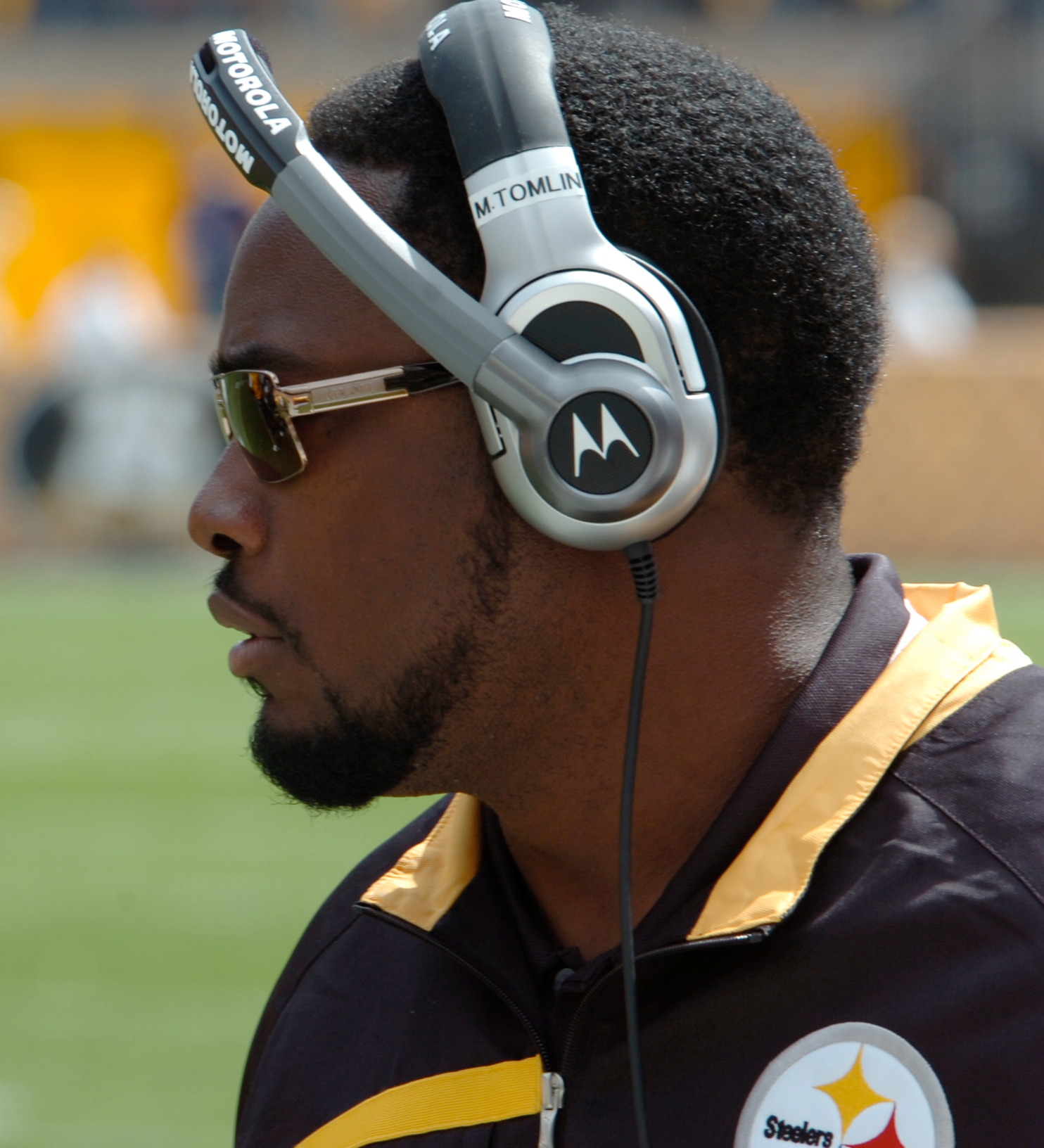
The same day that Smith and Dungy went to the top of professional football, Mike Tomlin, the defensive coordinator for the Minnesota Vikings, was named the head coach of the Pittsburgh Steelers, an ascension if there ever was one. At the age of 34, Tomlin became the 16th coach in the storied franchise’s 74-year history, and its first black head coach, sharing the heady company of Chuck Noll and Bill Cowher.

“I’m still coming to grips with what that means,” Tomlin told The AP.

Since this happened – since before it happened, really -- there’s been largely unintelligent talk among the blognoscenti that it’s not really such a big deal as all that, a curious willingness to downplay it as a social achievement. “Why are we so insistent that we go on talking about ‘the first black this, the first black that?,” goes the thinking.

And such thoughts suggest something hopeful, almost perversely optimistic: the idea that, among some bloggers at least, the factor of race is in and of itself not enough to explain the complexities of modern American life. For some, it seems, there’s an exhaustion about the issue of race that’s rooted in a kind of existential boredom, rather than connected to the historical emotionalism of arguments on civil rights and discrimination, or even to a basic sense of justice and fair play. There’s just too much else going on.

That starts to be the kind of perspective that black Americans, and others in the American mosaic, have had for years: that our differences need not be differences as much as distinctions.

This is the first athletic win-win situation the country’s had in some time, and probably ever. Oh, the partisans will be there: yahoos from Indianapolis and yahoos from Chicago will turn up in Miami and make that city a bigger spectacle than it already is. And they’ll do what fans from two fiercely loved cities are supposed to do.

But step back, peep the bigger picture. This time, the idea of equality wins – not just the idea of equality but the praxis of equality, the real thing, achieved where everyday people live every day, in the wider culture that defines and explains what we are as a nation.

That’s means we all win: because it proves that we all can win. And that’s grounds for nothing less than hope.
-----
Image credits: Dungy: White House (public domain); Tomlin: SteelCityHobbies, licensed under Creative Commons Attribution 2.0 license

Wednesday, January 10, 2007

World leader pretend

In Stanley Kubrick’s classic nuclear-age noir comedy “Dr. Strangelove,” the paranoid, delusional Gen. Jack D. Ripper (played by the eternal Sterling Hayden) uttered words that, even from the distance of 1964, put today’s American military debacle in the making in bright relief.

Ripper, in explaining why he had ordered a SAC bomber wing to attack Russia, justified the action with a burst of malign justification couched in military history – condemning the role of politicians in the art of war.

“Do you recall what Clemenceau once said about war?" Ripper asked his adjutant, Col. Mandrake (the equally indelible Peter Sellers). "He said war was too important to be left to the generals. When he said that, 50 years ago, he might have been right. But today, war is too important to be left to politicians. They have neither the time, the training, nor the inclination for strategic thought."

Jack D. Ripper said that forty years ago; he was right then and he’s right today. But by extension, if politicians lack the mental abilities of generals, it’s also safe to say that politicians shouldn’t presume to know better than the generals when it comes to application of strategic thought.

That is the folly in the making of President George Bush, who tonight announced his intent to add 21,500 more American forces to the war effort in Iraq, against the best advice of his military leadership. With his willingness to depart from the counsel of his war council, tried and tested and generals for a damn good reason, President Bush prepares to deepen the misadventure that will finally doom his presidency, damage his party, and all but destroy the global moral credibility of the United States for years to come.

◊ ◊ ◊

The hamfisted logic of the speech, its potential to be the fodder of satire won't escape writers and comedians in the future: the fact that George Bush made what may be the defining national address of his presidency from the library in the basement of the White House. It wasn't offered in the loftier, more regal trappings of the East Room, not even from the workaday space of the Oval Office, but from the location that may be closer to a bunker than anywhere else in the White House.

Siege mentality? Try "surge" mentality. That word has dominated administration thinking for the last month. Its primary evangelist, none other than the president, was clearly, visibly under siege on Wednesday. His eyes and eyebrows had the shape of a man terrified of being found out, someone trying hard to keep an impossible secret. He had the look of a man with what the late Hunter S. Thompson called "the fear."

Newsweek’s Howard Fineman observed that the commander-in-chief "spoke with all the confidence of a perp in a police lineup."

President Bush stood at the podium and spoke to the American public with the dazed bewilderment of a man mounting the gallows. In fact, his 22-minute, 3,956-word address bore the seeds, if not the fruit, of his own political obituary. It finally sounded the death knell of his bid for common cause with the American people, who soundly repudiated his policies at the polls in November. But President Bush also saw the abandonment of many in his own party – Senators Brownback, Collins, Hagel, Voinovich and others who jumped from the leaking ship of state into their own lifeboats.

"This is a dangerously wrong-headed strategy that will drive America deeper into an unwinnable swamp at a great cost,” Sen. Chuck Hagel, R-Neb., a member of the Foreign Relations Committee, said in a statement.

Hagel, himself a Vietnam veteran, said it was “wrong to place American troops into the middle of Iraq’s civil war,” warned that Bush’s plan would “cost more American lives, sink us deeper into the bog of Iraq; making it more difficult to get out; cost billions of dollars more; [and] further strain an American military that has already reached its breaking point.”

The question becomes how a man who half a dozen years ago carried his sense of the American people – their desires and dreams – into the White House could be so profoundly deaf to the desires and dreams of those same Americans, and more besides, in the current undertaking in Iraq.

◊ ◊ ◊

What makes this escalation in troop strength so galling – the word “surge” being yet another example of the administration’s strategy of misnomer, and nothing more – is the fact that it’s been tried before at least four times before, with outcomes as gradually disastrous as those we can expect this time. Past performance is no guarantee of future, better, results.

"The situation in Iraq is unacceptable to the American people -- and it is unacceptable to me," the president said. "Our troops in Iraq have fought bravely. They have done everything we have asked them to do. Where mistakes have been made, the responsibility rests with me," he said with a gratuitous humility, appearing to own up to what Americans have known for years.

Later, Bush the brilliant military strategist explains what's gone wrong in the sectarian crucible of Baghdad.

"Our past efforts to secure Baghdad failed for two principal reasons: There were not enough Iraqi and American troops to secure neighborhoods that had been cleared of terrorists and insurgents. And there were too many restrictions on the troops we did have. Our military commanders reviewed the new Iraqi plan to ensure that it addressed these mistakes. They report that it does. They also report that this plan can work."

But those generals had their arms twisted to come around to his way of thinking. We know that's true by listening to the president not so long ago, in a moment of lucidity.

"It's important to trust the judgment of the military when they're making military plans," Bush told The Washington Post in an interview in December. "I'm a strict adherer to the command structure."

Jack D. Ripper would be proud.

Then Bush the student of history weighs in with his vision of postwar Iraq.

"Victory will not look like the ones our fathers and grandfathers achieved. There will be no surrender ceremony on the deck of a battleship. But victory in Iraq will bring something new in the Arab world -- a functioning democracy that polices its territory, upholds the rule of law, respects fundamental human liberties, and answers to its people. A democratic Iraq will not be perfect. But it will be a country that fights terrorists instead of harboring them -- and it will help bring a future of peace and security for our children and our grandchildren."

Baked into this overview is the abiding insistence that the American vision of democracy is the only one that matters. Left unsaid is the fact that many of the "terrorists" he speaks of are Shiites and Sunnis who, for all their long-held sectarian differences, are of like mind and action in determination to drive the Americans from their country.

Also implicit in his speech, whose final sentences invoke the word "prevail," is the shopworn American notion of winning and losing.

As we've noted before, in the Iraq war, those words and the United States' relation to them are fraught with many interpretations. When you're talking about the Bush strategy, those words deserve to bear quote marks.

The words “winning” and “losing” are worthless in the context of the current conflict precisely because they fail to recognize the currency by which advantage and disadvantage are measured in the current conflict.

Those words – and their absolutist, zero-sum-game cousins, “victory” and “defeat” – are the historical products of a style of warfare reflecting traditional benchmarks of military success: the subjugation of an enemy’s standing army; the decimation of an enemy’s economy and infrastructure; the defeat and humiliation of an enemy’s political leadership; the capitulation of an enemy’s civilian population either through outright occupation or by exploiting affinities and sympathies (what we called “winning hearts and minds” in the era of the Vietnam War).

None of those factors is really in play in the current situation in Iraq. Even the administration’s use of the word “enemy” rings hollow: in the old sectarian swirl of Shiites, Sunnis and Kurds, we don’t even have a firm idea of who “the enemy” really is.

But finally, with the planned escalation of our military presence in Iraq, Bush undercuts the presumed objective behind their introduction: a freestanding Iraqi government ready, able and willing to call its own shots.

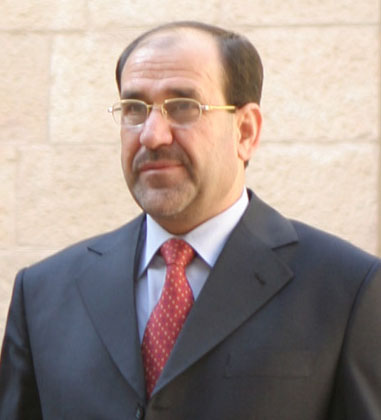
With the addition of thousands of American troops, the government of Prime Minister Nour al-Maliki has officially no incentive whatsoever to do what must be done to nurture and sustain itself as a government. The Maliki government knows that no matter what, the American watchdog will likely be there for the foreseeable, and with a bigger presence tomorrow than today.

"In going for more troops, Bush is picking an option that seems to have little favor beyond the White House and a handful of hawks on Capitol Hill and in think tanks who have been promoting the idea almost since the time of the invasion," wrote Michael Abramowitz, Robin Wright and Thomas E. Ricks in the Washington Post this week.

But the president's thinking remains contagious. It still has its supporters on the Hill (the diehards within his own party) and, obviously, within the administration. The new secretary of defense, Robert Gates, announced that the deployment orders for those troops would be signed after the speech without delay. They will be tomorrow, if he hasn't done it already.

And still others were willing to "stay the course." “It is definitely feasible to secure the population.” That’s what Jack Keane, formerly the U.S. Army vice chief of staff and now a Bush policy adviser, told Charlie Rose on Jan. 8, completely missing the point of both the initial objective of the war and the ultimate objective of adding more troops. The Iraq war’s objective has never been to “secure the population.” Our current concern has been to quell the sectarian violence – Shiias against Sunnis -- that was a fact of Iraqi life 1,300 years before the United States was. In that respect, the mission of the United States is approaching a fool’s errand.

"The year ahead will demand more patience, sacrifice, and resolve," the president said from the basement of the house he lives in. "It can be tempting to think that America can put aside the burdens of freedom. Yet times of testing reveal the character of a nation. ... "

But after the last three years and ten months, after an exercise in folly that has cost us 3,016 lives and costs us $8 billion a month, this country doesn't need exercises in character-building -- any more than President Bush was inclined to engage in nation-building not so long ago.

In 1988, R.E.M. released a song whose poetic prescience is nothing less than phenomenal, given our current circumstances. The song "World Leader Pretend" (written and recorded, oddly enough, in the administration of President Bush's father, Bush #41), contains lyrics that suggest a universality of arrogance:

This is my mistake, let me make it good
I raised the wall
and I will be the one to knock it down "


President Bush is erecting a wall -- not a physical structure like the one proposed for the southern borders of this nation, not the serpentine experiment in Middle Eastern apartheid that separates Israel from the Palestinian territories.

President Bush is raising a wall separating this nation -- its values and traditions and mosaic of worthy cultures and aspirations -- from the world this nation presumes to lead.

For the good of this nation, the American people -- their collective strength, their unstoppable populist power -- must be the ones to knock it down.
-----
Image credit: Bush and al-Maliki: U.S. Government (public domain); Sterling Hayden and Peter Sellers: publicity still from "Dr. Strangelove," Columbia Pictures

Wednesday, January 3, 2007

The Word according to Pat

Thanks, Pat Robertson. Thanks a lot. Great way to start the year. You sure know to kill a party.

As if the country wasn't nervous enough about the spectre of terrorism, the televangelist provocateur and amateur Nostradamus has belched up his latest forecast: the United States will see a terroristic event involving mass casualties sometime later this year.

“I’m not necessarily saying it’s going to be nuclear,” Robertson said on his news-and-talk television show “The 700 Club” on the Christian Broadcasting Network. “The Lord didn’t say nuclear. But I do believe it will be something like that.”

If there's any good news in all of this, it's the fact that Robertson's track record for prognostication has been spotty at best.

In January 2004 he predicted that President Bush would easily win re-election. Bush won 51 percent of the vote that fall, beating Democratic Sen. John Kerry of Massachusetts. He also predicted Bush’s victory for a second term in 2005.

But back in May, he said God told him that storms and possibly a tsunami would hit the United States in 2006 (no word on whether the Great Seer saw Katrina coming the year before).

Sometimes his pronouncements aren't so much predictive as a nasty case of schadenfreude: the Oracle of the Ariwaves suggested, in January 2006, that God punished Ariel Sharon, then the Israeli Prime Minister, with a coma-inducing stroke for ceding Israeli land to the Palestinians.

That darn Pat, you never know what he'll say next. We're waiting patiently for his forecast of the outcome of the Iraq war. It'll do wonders for his ratings if not his relationship with God. If it strikes the right chord, who knows? Pat Robertson might be in line for a Cabinet post, a seat alongside the seers of the administration, more adept with dartboards than with data.