We’re not where we used to be

You should be redirected to the new address. If that doesn't happen in a second, visit
http://short-sharp-shock.blogspot.com
Oh, and update your bookmarks. Thanks.

Monday, January 22, 2007

The last men standing

Well, well, well. If you live long enough, it seems, you will see everything. On Sunday, Feb. 4, Super Bowl XLI, the forty-first distillation of the great national gladiatorial pastime, the brutal choreography that is American football, will take place amid a backdrop of history. When the Chicago Bears face off against the Indianapolis Colts, for the first time in both the history of the National Football League and the history of big-money professional team sports in America, the championship game will be played by teams lead by black coaches.

For reasons that go beyond regional partisanship, this will be the first Super Bowl in memory where the whole country wins, no matter which coach or quarterback hoists the Vince Lombardi trophy next month.

It’s hard to always make a big deal out of the names of sports teams, but this time the names of the two teams left standing after sixteen weeks are a match for the respective physicalities of the two men leading those teams into the spectacle of the Super Bowl. You can’t look at sturdy, methodical Lovie Smith, coach of the Chicago Bears and not come away with a legitimate comparison to an actual bear, big, burly, quietly strong. Likewise, in Indianapolils Colts coach Tony Dungy, there’s the lean, wiry, angular countenance of a colt, brash and quick, daring and stronger than it realizes it is.

What they have in common is being brothers at the top of their game, two black men who each defeated teams coached by coaches with Super Bowl rings in their safe-deposit boxes -- damn!


It always happens like that: After years of coming up empty, it all comes together in a single day. Smith preceded Dungy to Super Bowl XLI by about four hours, his team beating a game and worthy New Orleans Saints squad, in the National Football Conference championship game, in a 39-14 asswhipping. Then Dungy’s Colts had just enough to get past the New England Patriots, 38-34, to win the American Football Conference title game.

And just that fast, history was made. It caught us all unawares. Just look at the Patriots' post-game press conference; coach Bill Belichick and quarterback Tom Brady looked gutshot, not so much speaking as mumbling in the hushed, inaudible fashion of an oration at a funeral.

It didn't stop there.

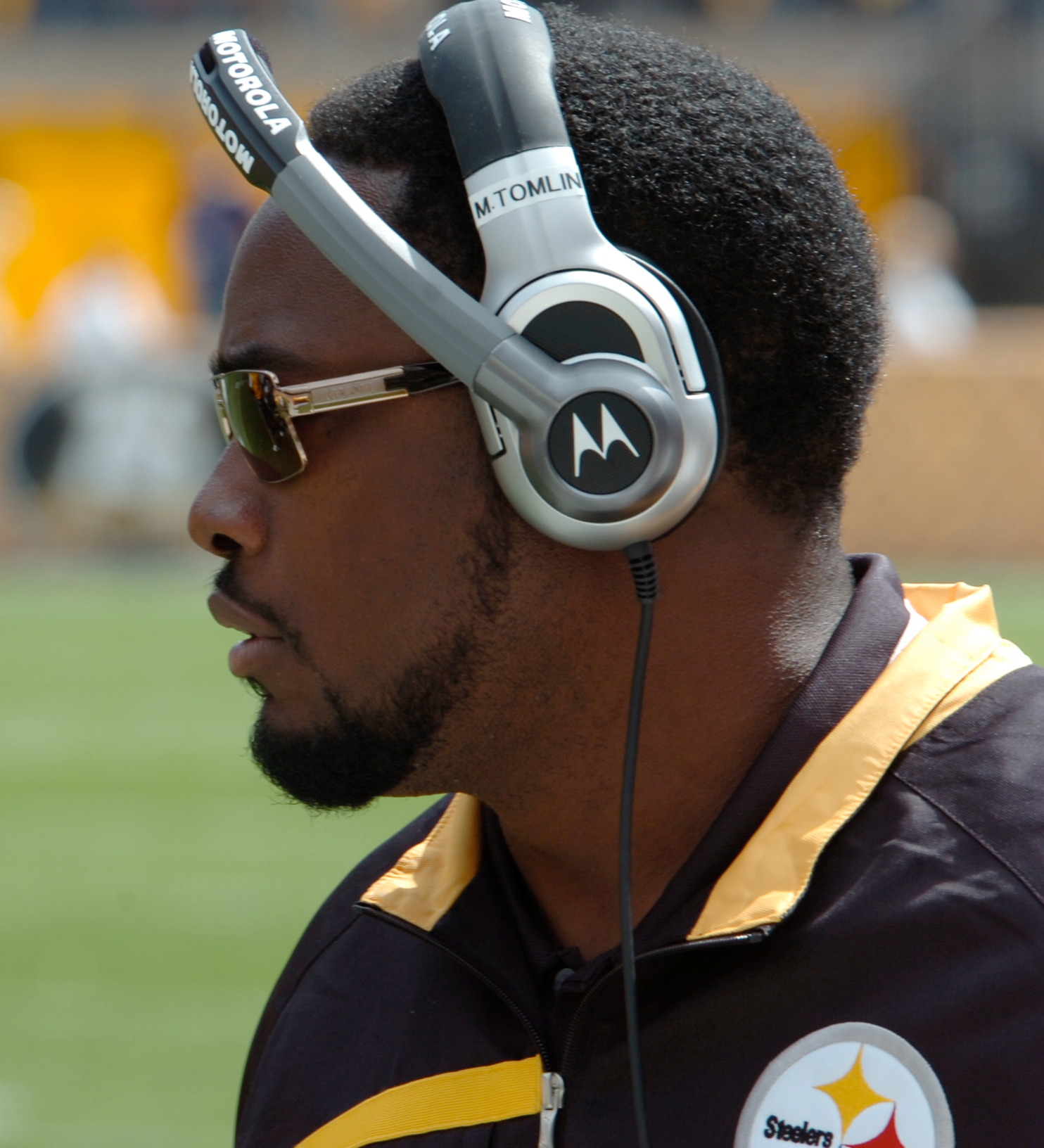
The same day that Smith and Dungy went to the top of professional football, Mike Tomlin, the defensive coordinator for the Minnesota Vikings, was named the head coach of the Pittsburgh Steelers, an ascension if there ever was one. At the age of 34, Tomlin became the 16th coach in the storied franchise’s 74-year history, and its first black head coach, sharing the heady company of Chuck Noll and Bill Cowher.

“I’m still coming to grips with what that means,” Tomlin told The AP.

Since this happened – since before it happened, really -- there’s been largely unintelligent talk among the blognoscenti that it’s not really such a big deal as all that, a curious willingness to downplay it as a social achievement. “Why are we so insistent that we go on talking about ‘the first black this, the first black that?,” goes the thinking.

And such thoughts suggest something hopeful, almost perversely optimistic: the idea that, among some bloggers at least, the factor of race is in and of itself not enough to explain the complexities of modern American life. For some, it seems, there’s an exhaustion about the issue of race that’s rooted in a kind of existential boredom, rather than connected to the historical emotionalism of arguments on civil rights and discrimination, or even to a basic sense of justice and fair play. There’s just too much else going on.

That starts to be the kind of perspective that black Americans, and others in the American mosaic, have had for years: that our differences need not be differences as much as distinctions.

This is the first athletic win-win situation the country’s had in some time, and probably ever. Oh, the partisans will be there: yahoos from Indianapolis and yahoos from Chicago will turn up in Miami and make that city a bigger spectacle than it already is. And they’ll do what fans from two fiercely loved cities are supposed to do.

But step back, peep the bigger picture. This time, the idea of equality wins – not just the idea of equality but the praxis of equality, the real thing, achieved where everyday people live every day, in the wider culture that defines and explains what we are as a nation.

That’s means we all win: because it proves that we all can win. And that’s grounds for nothing less than hope.
-----
Image credits: Dungy: White House (public domain); Tomlin: SteelCityHobbies, licensed under Creative Commons Attribution 2.0 license

Wednesday, January 10, 2007

World leader pretend

In Stanley Kubrick’s classic nuclear-age noir comedy “Dr. Strangelove,” the paranoid, delusional Gen. Jack D. Ripper (played by the eternal Sterling Hayden) uttered words that, even from the distance of 1964, put today’s American military debacle in the making in bright relief.

Ripper, in explaining why he had ordered a SAC bomber wing to attack Russia, justified the action with a burst of malign justification couched in military history – condemning the role of politicians in the art of war.

“Do you recall what Clemenceau once said about war?" Ripper asked his adjutant, Col. Mandrake (the equally indelible Peter Sellers). "He said war was too important to be left to the generals. When he said that, 50 years ago, he might have been right. But today, war is too important to be left to politicians. They have neither the time, the training, nor the inclination for strategic thought."

Jack D. Ripper said that forty years ago; he was right then and he’s right today. But by extension, if politicians lack the mental abilities of generals, it’s also safe to say that politicians shouldn’t presume to know better than the generals when it comes to application of strategic thought.

That is the folly in the making of President George Bush, who tonight announced his intent to add 21,500 more American forces to the war effort in Iraq, against the best advice of his military leadership. With his willingness to depart from the counsel of his war council, tried and tested and generals for a damn good reason, President Bush prepares to deepen the misadventure that will finally doom his presidency, damage his party, and all but destroy the global moral credibility of the United States for years to come.

◊ ◊ ◊

The hamfisted logic of the speech, its potential to be the fodder of satire won't escape writers and comedians in the future: the fact that George Bush made what may be the defining national address of his presidency from the library in the basement of the White House. It wasn't offered in the loftier, more regal trappings of the East Room, not even from the workaday space of the Oval Office, but from the location that may be closer to a bunker than anywhere else in the White House.

Siege mentality? Try "surge" mentality. That word has dominated administration thinking for the last month. Its primary evangelist, none other than the president, was clearly, visibly under siege on Wednesday. His eyes and eyebrows had the shape of a man terrified of being found out, someone trying hard to keep an impossible secret. He had the look of a man with what the late Hunter S. Thompson called "the fear."

Newsweek’s Howard Fineman observed that the commander-in-chief "spoke with all the confidence of a perp in a police lineup."

President Bush stood at the podium and spoke to the American public with the dazed bewilderment of a man mounting the gallows. In fact, his 22-minute, 3,956-word address bore the seeds, if not the fruit, of his own political obituary. It finally sounded the death knell of his bid for common cause with the American people, who soundly repudiated his policies at the polls in November. But President Bush also saw the abandonment of many in his own party – Senators Brownback, Collins, Hagel, Voinovich and others who jumped from the leaking ship of state into their own lifeboats.

"This is a dangerously wrong-headed strategy that will drive America deeper into an unwinnable swamp at a great cost,” Sen. Chuck Hagel, R-Neb., a member of the Foreign Relations Committee, said in a statement.

Hagel, himself a Vietnam veteran, said it was “wrong to place American troops into the middle of Iraq’s civil war,” warned that Bush’s plan would “cost more American lives, sink us deeper into the bog of Iraq; making it more difficult to get out; cost billions of dollars more; [and] further strain an American military that has already reached its breaking point.”

The question becomes how a man who half a dozen years ago carried his sense of the American people – their desires and dreams – into the White House could be so profoundly deaf to the desires and dreams of those same Americans, and more besides, in the current undertaking in Iraq.

◊ ◊ ◊

What makes this escalation in troop strength so galling – the word “surge” being yet another example of the administration’s strategy of misnomer, and nothing more – is the fact that it’s been tried before at least four times before, with outcomes as gradually disastrous as those we can expect this time. Past performance is no guarantee of future, better, results.

"The situation in Iraq is unacceptable to the American people -- and it is unacceptable to me," the president said. "Our troops in Iraq have fought bravely. They have done everything we have asked them to do. Where mistakes have been made, the responsibility rests with me," he said with a gratuitous humility, appearing to own up to what Americans have known for years.

Later, Bush the brilliant military strategist explains what's gone wrong in the sectarian crucible of Baghdad.

"Our past efforts to secure Baghdad failed for two principal reasons: There were not enough Iraqi and American troops to secure neighborhoods that had been cleared of terrorists and insurgents. And there were too many restrictions on the troops we did have. Our military commanders reviewed the new Iraqi plan to ensure that it addressed these mistakes. They report that it does. They also report that this plan can work."

But those generals had their arms twisted to come around to his way of thinking. We know that's true by listening to the president not so long ago, in a moment of lucidity.

"It's important to trust the judgment of the military when they're making military plans," Bush told The Washington Post in an interview in December. "I'm a strict adherer to the command structure."

Jack D. Ripper would be proud.

Then Bush the student of history weighs in with his vision of postwar Iraq.

"Victory will not look like the ones our fathers and grandfathers achieved. There will be no surrender ceremony on the deck of a battleship. But victory in Iraq will bring something new in the Arab world -- a functioning democracy that polices its territory, upholds the rule of law, respects fundamental human liberties, and answers to its people. A democratic Iraq will not be perfect. But it will be a country that fights terrorists instead of harboring them -- and it will help bring a future of peace and security for our children and our grandchildren."

Baked into this overview is the abiding insistence that the American vision of democracy is the only one that matters. Left unsaid is the fact that many of the "terrorists" he speaks of are Shiites and Sunnis who, for all their long-held sectarian differences, are of like mind and action in determination to drive the Americans from their country.

Also implicit in his speech, whose final sentences invoke the word "prevail," is the shopworn American notion of winning and losing.

As we've noted before, in the Iraq war, those words and the United States' relation to them are fraught with many interpretations. When you're talking about the Bush strategy, those words deserve to bear quote marks.

The words “winning” and “losing” are worthless in the context of the current conflict precisely because they fail to recognize the currency by which advantage and disadvantage are measured in the current conflict.

Those words – and their absolutist, zero-sum-game cousins, “victory” and “defeat” – are the historical products of a style of warfare reflecting traditional benchmarks of military success: the subjugation of an enemy’s standing army; the decimation of an enemy’s economy and infrastructure; the defeat and humiliation of an enemy’s political leadership; the capitulation of an enemy’s civilian population either through outright occupation or by exploiting affinities and sympathies (what we called “winning hearts and minds” in the era of the Vietnam War).

None of those factors is really in play in the current situation in Iraq. Even the administration’s use of the word “enemy” rings hollow: in the old sectarian swirl of Shiites, Sunnis and Kurds, we don’t even have a firm idea of who “the enemy” really is.

But finally, with the planned escalation of our military presence in Iraq, Bush undercuts the presumed objective behind their introduction: a freestanding Iraqi government ready, able and willing to call its own shots.

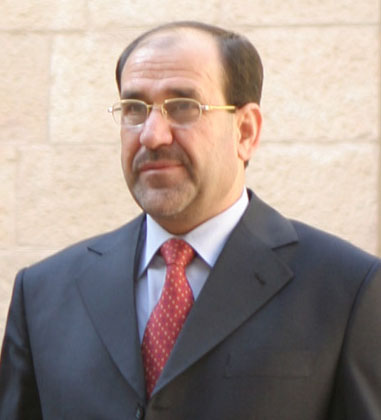
With the addition of thousands of American troops, the government of Prime Minister Nour al-Maliki has officially no incentive whatsoever to do what must be done to nurture and sustain itself as a government. The Maliki government knows that no matter what, the American watchdog will likely be there for the foreseeable, and with a bigger presence tomorrow than today.

"In going for more troops, Bush is picking an option that seems to have little favor beyond the White House and a handful of hawks on Capitol Hill and in think tanks who have been promoting the idea almost since the time of the invasion," wrote Michael Abramowitz, Robin Wright and Thomas E. Ricks in the Washington Post this week.

But the president's thinking remains contagious. It still has its supporters on the Hill (the diehards within his own party) and, obviously, within the administration. The new secretary of defense, Robert Gates, announced that the deployment orders for those troops would be signed after the speech without delay. They will be tomorrow, if he hasn't done it already.

And still others were willing to "stay the course." “It is definitely feasible to secure the population.” That’s what Jack Keane, formerly the U.S. Army vice chief of staff and now a Bush policy adviser, told Charlie Rose on Jan. 8, completely missing the point of both the initial objective of the war and the ultimate objective of adding more troops. The Iraq war’s objective has never been to “secure the population.” Our current concern has been to quell the sectarian violence – Shiias against Sunnis -- that was a fact of Iraqi life 1,300 years before the United States was. In that respect, the mission of the United States is approaching a fool’s errand.

"The year ahead will demand more patience, sacrifice, and resolve," the president said from the basement of the house he lives in. "It can be tempting to think that America can put aside the burdens of freedom. Yet times of testing reveal the character of a nation. ... "

But after the last three years and ten months, after an exercise in folly that has cost us 3,016 lives and costs us $8 billion a month, this country doesn't need exercises in character-building -- any more than President Bush was inclined to engage in nation-building not so long ago.

In 1988, R.E.M. released a song whose poetic prescience is nothing less than phenomenal, given our current circumstances. The song "World Leader Pretend" (written and recorded, oddly enough, in the administration of President Bush's father, Bush #41), contains lyrics that suggest a universality of arrogance:

This is my mistake, let me make it good
I raised the wall
and I will be the one to knock it down "


President Bush is erecting a wall -- not a physical structure like the one proposed for the southern borders of this nation, not the serpentine experiment in Middle Eastern apartheid that separates Israel from the Palestinian territories.

President Bush is raising a wall separating this nation -- its values and traditions and mosaic of worthy cultures and aspirations -- from the world this nation presumes to lead.

For the good of this nation, the American people -- their collective strength, their unstoppable populist power -- must be the ones to knock it down.
-----
Image credit: Bush and al-Maliki: U.S. Government (public domain); Sterling Hayden and Peter Sellers: publicity still from "Dr. Strangelove," Columbia Pictures

Wednesday, January 3, 2007

The Word according to Pat

Thanks, Pat Robertson. Thanks a lot. Great way to start the year. You sure know to kill a party.

As if the country wasn't nervous enough about the spectre of terrorism, the televangelist provocateur and amateur Nostradamus has belched up his latest forecast: the United States will see a terroristic event involving mass casualties sometime later this year.

“I’m not necessarily saying it’s going to be nuclear,” Robertson said on his news-and-talk television show “The 700 Club” on the Christian Broadcasting Network. “The Lord didn’t say nuclear. But I do believe it will be something like that.”

If there's any good news in all of this, it's the fact that Robertson's track record for prognostication has been spotty at best.

In January 2004 he predicted that President Bush would easily win re-election. Bush won 51 percent of the vote that fall, beating Democratic Sen. John Kerry of Massachusetts. He also predicted Bush’s victory for a second term in 2005.

But back in May, he said God told him that storms and possibly a tsunami would hit the United States in 2006 (no word on whether the Great Seer saw Katrina coming the year before).

Sometimes his pronouncements aren't so much predictive as a nasty case of schadenfreude: the Oracle of the Ariwaves suggested, in January 2006, that God punished Ariel Sharon, then the Israeli Prime Minister, with a coma-inducing stroke for ceding Israeli land to the Palestinians.

That darn Pat, you never know what he'll say next. We're waiting patiently for his forecast of the outcome of the Iraq war. It'll do wonders for his ratings if not his relationship with God. If it strikes the right chord, who knows? Pat Robertson might be in line for a Cabinet post, a seat alongside the seers of the administration, more adept with dartboards than with data.

Sunday, December 31, 2006

Goodbye to all this (The Departed 2006)

"So long, farewell, auf wiedersehen, goodbye," goes the lyric from that song from "The Sound of Music," a tune lately discovering new life in a commercial for Kia automobiles.

Less musically than the Trapp Family Singers or the Kia crew, we're also saying some farewells, particularly to a year that, twisting a phrase in Latin made by Queen Elizabeth II some years back, was sure one horrible anus.

In no particular order of derision, then, joyful goodbyes to:

Donald Rumsfeld, the father of all ideologically-driven secretaries of defense. Were you one of the biggest obstacles to a clear-eyed foreign policy concerning Iraq? Were you needlessly divisive and polarizing? Are we glad as hell you’re gone? You bet.

Saddam Hussein: You found out the hard way that there is no god but God, and that don’t include you. Time to go lord it over the minions of the underworld. You're all done; don't let the gates of hell hit you in the ass on your way in.

Slobodan Milosevic: You earned your nickname, the Butcher of the Balkans. More than 200,000 people died as you cultivated old Serbian animosities into a decade-long civil war. And then you had nerve enough to die during your own war-crimes trial in The Hague – the ultimate escape from justice. In this world, anyway.

Augusto Pinochet: More than 3,000 human beings disappeared under your regime in Chile, after you overthrew a democratically-elected government. Thank you, at long last, for doing the same.

Tom DeLay: You’re now free to pursue other meaningful employment in the private sector. Perhaps a return to your former line of work in the pest control business is in order.

George Allen: You at least had the grace not to contest the election that bounced you out of office. Relax, take the Trent Lott road to contrition and maybe we’ll hear from you in a year or three, you macaca, you.

Karl Rove: There’s your math and there’s The Math. Your class in Remedial Political Arithmetic 101 starts when the new Congress does. Don’t cut class.

Bode Miller: The poster boy for Olympic athletic excess. America’s presumptive golden boy at the February Games in Torino, he entered five events and didn’t medal in a single one. Interviewed by Newsweek’s Devin Gordon, Miller apparently didn’t really want to compete at the Games. Note to Bode: Next time you don’t give a damn, don’t show up.

Michael Richards: Anonymity – and the millions you’ll earn forever from your share of the “Seinfeld” fortune – has to be better than a standup career that needs the N-word. We’ve heard Lenny Bruce, and you’re no Lenny Bruce.

Kenneth Lay: We were surprised to hear you died in Aspen of the effects of a bad heart; thousands of Enron employees doubted you even had one.

James Frey: Let’s get it straight. There’s a fiction shelf for books and a nonfiction shelf for books. It’s that way for a reason. Failure to understand that has a way of shattering a reputation into, well, a million little pieces.

Mike Nifong: The Duke lacrosse-team rape case was a sorry way to build your career as a prosecutor. But cheer up -- with the charges of ethics violations you’re facing, you’ve got a promising career ahead of you as a K Street lobbyist, evangelical minister or a Republican congressman. What a great country.

Bill Frist: The Tennessee senator and stock trading enthusiast wisely stepped out of politics and ended speculation on taking a run for the big chair in 2008. We’re guessing that maybe he's gone back into private medical practice. Good move -- you can’t heal the patient when you’re part of the disease.

Others aren’t leaving the scene but we wish to God they were:

Paris Hilton: Shut up. Just shut up.

Britney Spears: Shut up. Please shut up. And buy some underwear.

Bill O’Reilly and Ann Coulter: Shut the fuck up.

O.J. Simpson, Pamela Anderson and K-Fed: Jesus, are you still here?

The word “truthiness”: All respect to Stephen Colbert, but this isn’t the contribution to the American lexicon he’s been led to believe it is. If truthiness means the politic blurring of fact and fiction, there must be lots of other suitable words that already exist. Hell, you’ll find most of ‘em in James Frey’s book.

There are other goodbyes we’d rather not be saying at all. With tears, all props & much love, we kiss goodbye to:

Robert Altman: Our favorite maverick of the movies. In a body of work that stretched from the ‘50s up to the work in progress he was developing before he died, Altman insisted on doing it his way, raising hell every step of the way.

Syd Barrett: Singer-songwriter, guitarist, cracked founding genius of Pink Floyd: Remember when you were young, you shone like the sun. Shine on you crazy diamond. Now there's a look in your eyes, like black holes in the sky. Shine on you crazy diamond. You were caught on the crossfire of childhood and stardom, blown on the steel breeze. Come on you target for faraway laughter, come on you stranger, you legend, you martyr, and shine!

Ed Bradley: He was tough, he was smart, he was cool, he was elegant, he was streetwise and no man in the history of television ever looked as good with an earring and a beard. Bradley broke racial barriers at CBS News in particular and in journalism in general, creating a powerful body of work in his quarter-century on “60 Minutes.” When he died on Nov. 9 of leukemia at Mount Sinai hospital in New York City at the age of 65, his friend Jimmy Buffett told him that the New York Knicks and the Democrats had both won. Bradley smiled, shortly before letting go of this life -- a life that won't be the same without him.

Gerald Boyd: Another trailblazer for journalists of darker hue, Gerry Boyd, a former managing editor of The New York Times, died on Nov. 23, of lung cancer. Boyd had the experience of too many black and brown journalists in this country: being The First. He was the first black metropolitan editor and managing editor at The Times. At 28, he was also the youngest journalist picked for a Nieman Fellowship at Harvard. But his firstness helped a lot of people become one of many in a business that still has too few.

Ahmet Ertegun: The Turk who favored bespoke suits and rock and roll, a founder of both Atlantic Records and the Rock and Roll Hall of Fame, died Dec. 14 after head injuries from a fall he took backstage during the Rolling Stones concert at President Bill Clinton's 60th birthday party at New York's Beacon Theatre in October. A native of Turkey, he had the ears for music we wish we had, seeking out the talents of talents from Clyde McPhatter, the Coasters, Solomon Burke and Aretha Franklin to Ray Charles, Led Zeppelin and the Rolling Stones. Our friend and former colleague Jon Pareles of The New York Times said it best: “[H]e was an outsider who had become something more than an insider, an American phenomenon who proved the best way to cross boundaries was with the promise of a good time.”

Buck O’Neil: He was a two-time Negro Leagues batting champion, baseball scout, war veteran, manager of the Kansas City Monarchs, the first black coach in the major leagues. But most Americans alive today remember John Jordan O'Neil as the gentle, folksy paterfamilias of Ken Burns' 1994 documentary "Baseball." In February 2006, it was thought O’Neil was headed for the Baseball Hall of Fame. But the game he loved -- or the sportswriters who only wrote about the game he loved -- stiffed him. A special 12-person committee commissioned to render final judgments on Negro Leagues and pre-Negro league figures did not vote him into Cooperstown. Buck was a class to the end: “Shed no tears for Buck,” he told friends that day. not going into the Hall of Fame, that ain’t going to hurt me that much, no. Before, I wouldn’t even have a chance. But this time I had that chance.” Was there a classier act in the game?

Samuel James Archibald: He was just Sam to hundreds of journalism students (including your humble narrator). The former political reporter and congressional aide who helped craft the landmark Freedom of Information Act of 1966. After 10 years of reporting on politics for The Sacramento Bee, Archibald joined the staff of newly elected Democratic Rep. John Moss of California. Angered by federal bureaucrats' refusals to release names of citizens fired for allegedly being communists, Moss formed a subcommittee that looked into government secrecy and made Archibald staff director. Archibald is credited with writing the original one-paragraph draft that stated -- with a simple elegance that has terrified bureaucrats ever since -- that all government information must be free and available to the public. After numerous exceptions and qualifications were added during an 11-year battle for enactment, during which Archibald served as ramrod, the measure became law in 1966. If you've ever read a government report since then, you can thank Sam Archibald for trying to make sure what's in it isn't truthiness, but truth.

Mal Deans: Malcolm "Mal" Deans, the only senior instructor emeritus at the University of Colorado School of Journalism, brought a scrappy, wise demeanor to the practice of teaching journalism. The School's student-produced newspaper, the Campus Press, dates back to when Deans created it so that CU journalism students could get hands-on experience. He also established a program that allowed seniors to work at local newspapers. It was Mal Deans who put in a good word for me with the brain trust at the Boulder Daily Camera in 1979, right before I graduated. Next thing I knew, I had my first job in journalism waiting for me before I graduated. You hear talk of guardian angels; mine had a fondness for scrapple, small talk and faith in skinny undergrads who loved the written word -- and who, thanks to him, still do.

Michael Britten: Friend, fellow writer and tireless fan of the blues and other music, Michael wrote reviews for Salon and other publications, investing his pieces with flair and insight. He gifted me with music I'd never heard before, and seemed to have an almost encyclopedic knowledge of that music, knowledge he shared generously and with a good humor that belied the relentless progression of the multiple sclerosis that ultimately took him.

There were others, of course. Gordon Parks. Ann Richards. Wilson Pickett. Bebe Moore Campbell. … and of course a celestial shout-out is due for Moms, Wilhelmina Sherman Ross, mother of all mothers, who crossed over the wide water this year and whom we love like our next breath, and miss terribly. There’s no pain like that loss, no emptiness you can imagine that matches the vacancy of self that emerges when your mother dies. It is another kind of darkness visible.

“It is easy to see the beginnings of things, and harder to see the ends.” wrote Joan Didion, in her essay “Goodbye to All That,” chronicling another kind of departure -- one of passion and spirit for a place. It is no stretch to suggest that, with the year about to expire as evidence, it is easier to embrace a year's beginnings, its intrinsic possibilities, than to cope with its tired, slouching ends. It's a matter of dealing with unexpected disillusionment arriving in unexpected ways.

Now, bidding farewell to a year of anything but magical thinking (Didion’s memoir a notable exception), we feel much the same. There are things we’ll miss, situations we wish we’d handled better, faces and smiles we wish we’d acknowledged when we had the chance. But mostly, ours is a wistfulness best savored not in front of us but looking through the rear-view mirror, everything we’d like to forget receding fast in the dusty distance, objects not closer than they actually appear --

Eyes on the road ahead, now, hands on the wheel, the fireworks, new faces and noisemakers dead ahead.

They’re dropping the ball at midnight, and when it falls, it’s in our court.

Let's get it started.
-----
Image credits: Tom DeLay: U.S. Congress (public domain); Syd Barrett: Flupe.com; Ed Bradley: CBS News; Gerald Boyd: photographer unknown

3,000+

There's no escaping the brutal geographic poetic justice in the news: On the last day of 2006, at the end of the deadliest month for the American military in Iraq in the preceding twelve, the Pentagon announced the death of the 3,000th American soldier in Iraq.

Spc. Dustin R. Donica, 22, of Spring, Texas, was killed Thursday by small arms fire in Baghdad, the Defense Department said.

Donica was one of at least 111 U.S. service members reported to have died in December.

The poetic justice? Donica hailed from Texas, the home state of President Bush. One can't help but consider a possible scenario, something that might happen years from now. Bush, oblivious to the connection, passes through Spring, Texas and stops to press the flesh of his kindred Texans.

The president will be received warmly, with due respect for the office, if not the former officeholder. But some will question the ex-president, with their eyes if not their actual voices. "Why, Mr. President? Why, sir? Why isn't Dustin Donica here among us today?" And no answer will be sufficient. No answer will be answer enough.

We should note that, the chaos of war being what it is, there is at least one other census of American dead, an accounting that makes another soldier the 3000th casualty of an unnecessary war.

According to a survey by CNN, the death of Sgt. Edward Shaffer, of Mount Alto, Pa., was the 3,000th American military fatality reported since the invasion began in March 2003.

Shaffer, all of 23, was wounded on Nov. 13 by a roadside bomb in Ramadi, the restive western Iraqi city where U.S. troops and insurgents trade fire on a near-daily basis, CNN reported.

But even with Shaffer's hometown, the poetic justice still obtains: Shaffer died at Fort Sam Houston ... Texas.

The deaths of Donica and Shaffer are the latest in a grim accounting: The American death toll was at 1,000 in September of 2004 and 2,000 by October 2005.

And it doesn't matter which of these tragically noble patriots was No. 3,000 -- whether the two stone-faced officers of the official notification detail ring a doorbell in Texas or Pennsylvania or the other forty-eight states, or its territories. Our needless national agony persists, from one year to the next. We are weaker as a nation, one by one by one.
----
Image credit: Department of Defense (public domain)

Dashikis for George

We’ve been a reliable critic of President Bush and his administration in a wide range of areas, and count on it, we will be again. But the Dec. 31 edition of The Washington Post gives light to a side of the Bush doctrine that's had scant public attention – something that demands credit be given when and where it’s due.

The Post reports that Bush “has tripled direct humanitarian and development aid to the world's most impoverished continent since taking office and recently vowed to double that increased amount by 2010 -- to nearly $9 billion.”

Wait a minute, you say. This is our President Bush? The one who ushered us into disastrous war in Iraq under dubious circumstances? The one who just outpointed Satan, Osama bin Laden and Kim Jong Il in an AP/AOL poll on the top villain of 2006?

True enough. The Post story is a surprise, and coming at the end of a year we’d all just as soon forget, not an unwelcome one.

“The moves have surprised -- and pleased -- longtime supporters of assistance for Africa, who note that because Bush has received little support from African American voters, he has little obvious political incentive for his interest,” the Post reports.

"I think the Bush administration deserves pretty high marks in terms of increasing aid to Africa," said Steve Radelet, a senior fellow at the Center for Global Development.

Citing the Paris-based Organization for Economic Cooperation and Development, the Post reports that Bush “has increased direct development and humanitarian aid to Africa to more than $4 billion a year from $1.4 billion in 2001,. And four African nations -- Sudan, Ethiopia, Egypt and Uganda -- rank among the world's top 10 recipients in aid from the United States.”

Besides just writing fat checks to Africa, Bush has also done the necessary face time, meeting with nearly three dozen African heads of state during his six years in office, the Post says.

The Post story notes one curious disconnect, given all this hands-across-the-water feeling for Africa; some activists, the Post says, “criticize Bush for not doing more to end the ongoing genocide in the Darfur region of Sudan …” That is odd, if you think about it. With Darfur’s potential for greater calamity than that which we’ve already seen, doing something there would seem to make an even more potent statement about America’s humanitarian intentions.

But the Post notes that others give him due props “for playing a role in ending deadly conflicts in Liberia, the Congo and other parts of Sudan. Meanwhile, Bush has overseen a steady rise in U.S. trade with Africa, which has doubled since 2001.”

"The evangelical community raised the awareness of HIV and AIDS to the president," said Rep. Donald M. Payne (N.J.), the top-ranking Democrat on the House International Relations subcommittee on Africa. "When the Bush administration came in, HIV and AIDS were not an overwhelming priority. Now we have seen a total metamorphosis," Payne told the Post.

You remember the old saying: If you can’t say something nice about someone, don’t say anything at all. U.S. presidents are exempt from that, of course, whether they like it or not. But it’s nice to be able to say something nice about someone who can really use it.

Get that man a daishiki.
-----
Image credit: Office of the President (public domain)